The Art of Conscious Dreaming
Wake up
inside the dream.
You spend a third of your life asleep. With lucid dreaming, some of that time becomes yours: to explore, create, heal, and transform.
Foundations
Your First
Lucid Dream
Three things have to happen before the dream. Lock these in and the rest follows.
8 Hours of Sleep
Lucid dreaming happens in REM, which peaks in the final hours of your sleep cycle. You cannot shortcut this. Seven to nine hours, consistently. Without it you are not even playing the game yet.
Dream Journal
Keep a journal on your nightstand. Write the moment you wake up, before you touch your phone. This trains your brain to retain dream memories and starts surfacing the patterns you need.
Sleep Hygiene
Cool room (65-68°F), screens off an hour before bed, no alcohol (it destroys REM), consistent sleep schedule. Magnesium glycinate and vitamin B6 both have research support for vivid dreaming.
Core Techniques
All Techniques, Explained
Every proven induction method from first habit to advanced protocol, ordered by difficulty and prerequisite. Click any technique to expand the full breakdown. Start at the top. Layer in the next method only after the previous one has taken hold.
Reality checks are tests you perform throughout your waking day to build a habit your sleeping brain will eventually replicate on its own. The point is not to confirm you are awake. The point is to ask, with genuine curiosity, whether you might be dreaming. That question is the whole mechanism.
Do them mechanically and they remain mechanical. Do them with real inquiry and the habit transfers. Most first lucid dreams start with a spontaneous reality check mid-dream, prompted by nothing except a trained instinct to question.
The Six Best Checks- Nose Pinch. Pinch your nose closed and try to breathe through it. Awake: impossible. In a dream: you breathe normally. This is the gold standard. The result is unmistakable and dramatic.
- Hand Check. Look at your hands slowly, one at a time. In dreams, fingers blur, multiply, fuse, or look subtly wrong. Take 10 full seconds. Give the dream time to fail.
- Text Check. Read a sentence. Look away. Read it again. In dreams, text shifts, scrambles, or changes entirely on the second read.
- Finger Through Palm. Push your index finger slowly into the opposite palm as if you expect it to pass through. In dreams, it does.
- Digital Clock. Look at the time, look away, look back. In dreams, numbers shift or become nonsensical between glances.
- Light Switch. Flip a switch. Lights in dreams frequently misbehave: staying on, staying off, flickering, or having no effect at all.
10 to 15 checks per day. Pick 2 or 3 and rotate them. Attach checks to existing triggers: every doorway, every time you pick up your phone, every time you sit down. Depth beats breadth. Doing the nose pinch 15 times a day with real curiosity transfers faster than doing six checks twice each with no thought.
- Doing the check while already thinking "I know I am awake." The genuine uncertainty is the mechanism.
- Picking too many checks and spreading attention too thin.
- Stopping after one week when nothing has happened. The transfer timeline is 2 to 4 weeks of consistent practice.
When a reality check first works in a dream, you may feel a surge of excitement that wakes you up immediately. Stabilize the moment it happens: rub your hands together vigorously, focus on a physical detail in the environment, speak aloud. Calm beats excited every time.
Dream signs are recurring elements specific to your dream life: certain people, locations, scenarios, or physical impossibilities that appear across multiple journal entries. Everyone has them. Most people have never looked for them.
A Dream-Initiated Lucid Dream (DILD) is what happens when you recognize one of these signs while asleep and the recognition triggers self-awareness. It is not a technique you execute at night. It is what emerges from the habit of studying your signs while awake.
The Four Categories- Form Signs. Objects or people that look physically wrong. Extra fingers. Faces that morph. Architecture that defies geometry. A door that opens onto void.
- Context Signs. Situations that could not occur in waking life. Back in high school. At a job you left years ago. Meeting someone who has died.
- Action Signs. Things you do in dreams that you never do awake. Flying. Running in slow motion. Speaking a language you do not know fluently.
- Emotion Signs. Feelings disproportionate to the visible situation. Terror with no apparent threat. Overwhelming joy from something mundane.
Review your dream journal weekly, not just read it. Actively look for patterns. Highlight anything that appears in more than one entry. Build a running list of your top 5 to 10 signs. Post it somewhere visible. Spend 30 seconds studying it before sleep each night.
For each sign, ask: "If I saw this right now, would I know I was dreaming?" The answer is usually no at first. Keep asking. You are planting a conditional: "If I see X, question reality." Over weeks, that conditional becomes a reflex. You see the old school, the dead relative, the impossible room, and something in your sleeping mind fires the question automatically.
You have dreamed about your childhood home three times in two months. You add it to your sign list. You start asking each morning: "If I saw that house, would I know?" One Tuesday at 6am you are in a dream. You see the house. Something catches. The question fires on its own: wait. Why am I here? And the sky cracks open with awareness.
WBTB is not a technique. It is the platform that makes every other technique dramatically more effective. Sleep 5.5 to 6 hours, wake deliberately, stay awake 20 to 60 minutes, then return to sleep with intention. What you return to is the most REM-dense sleep window of the entire night.
Why It Works: Sleep ArchitectureYour night is structured in 90-minute cycles. The first three are dominated by deep slow-wave sleep. REM periods are short: 5 to 15 minutes. By hours five and six, the slow-wave debt is cleared. Remaining cycles are increasingly REM-heavy, with segments extending to 30, 45, even 60 minutes. Waking at 5.5 hours and returning to sleep sends you back into REM almost immediately, often within 5 to 15 minutes. Your prefrontal cortex, partially active during the wake window, carries that priming into the dream.
- Read about lucid dreaming (primes the prefrontal cortex for self-awareness)
- Review your dream journal from that night
- Study your dream sign list for 5 minutes
- Meditate quietly at the boundary between waking and drifting
- Listen to binaural beats in the theta range (4 to 7 Hz)
- Social media or news (cortisol spike, mind activation)
- Bright overhead lights (suppresses melatonin)
- Staying up more than 60 minutes (the window closes)
- Full meals (digestion disrupts sleep quality on return)
- Anything that raises your heart rate
Set an alarm for 5 hours 45 minutes after you fall asleep. Sit up, make tea, read about lucid dreaming in dim light for 30 minutes. Review what you dreamed. When drowsy again, return to bed with one clear intention. Apply MILD, WILD, FILD, or SSILD on re-entry. Any of them will work dramatically better here than from a cold start.
5.5 hours is a starting point, not a rule. Your ideal window depends on total sleep duration and natural cycle length. If sleeping 7.5 hours, wake at 5.5 and re-enter for the final two hours. If sleeping 9 hours, try waking at 6. Experiment in 15-minute increments over a few weeks to find your peak.
MILD (Mnemonic Induction of Lucid Dreams) was developed by Dr. Stephen LaBerge at Stanford's Sleep Research Center in the late 1970s. It is built on prospective memory: the ability to remember to perform an action at a future point in time. You use prospective memory every day. "I will pick up groceries on the way home." LaBerge realized that becoming lucid is the same cognitive task: "I will remember that I am dreaming when I am in a dream."
The Step-by-Step ProtocolDone during the WBTB re-entry window, lying in bed, already drowsy:
- Recall a dream from earlier that night, or any recent one with clear detail. Pick one specific scene.
- Replay the scene in your mind with one change: this time, you notice something wrong. A detail that could not be real.
- Watch yourself in that scene perform a reality check. Watch it succeed.
- Watch yourself realize: this is a dream. Feel the moment of recognition land. The clarity, the expansion of awareness.
- As you sink toward sleep, repeat quietly: "Next time I am dreaming, I will remember that I am dreaming."
- Let the phrase and the visualization overlap as you go under. Falling asleep mid-phrase is the correct outcome.
The phrase alone is a cue, not the full technique. The visualization gives the sleeping brain a concrete path: a specific scene, a specific moment of recognition, a specific feeling. You are not just setting an intention. You are rehearsing an outcome. The brain attempts to complete the task when a dream begins.
- Repeating the phrase without actually visualizing anything.
- Visualizing a generic "ideal dream" instead of a specific past dream. Use real material.
- Getting frustrated when you fall asleep mid-phrase. That is the goal.
- Doing MILD without WBTB. Cold-start MILD is significantly less effective.
You dreamed about driving on an unfamiliar road. As you drift off during re-entry, replay it. You are in the car. The dashboard numbers are wrong. You look at your hands on the wheel: six fingers. You hear yourself say it inside the memory: this is a dream. Feel the realization land. Then begin the phrase as sleep takes you: "Next time I am dreaming, I will remember that I am dreaming."
Wake-Initiated Lucid Dreaming (WILD) is the only technique where you maintain an unbroken thread of consciousness from waking into the dream. You do not lose awareness and regain it mid-dream. You carry it continuously through the transition and watch the dream world assemble itself around you. It is the most powerful technique in the kit and the most technically demanding.
The Four Phases- Phase 1: Body Heaviness. Muscles release. You feel sinking, heaviness, or a fading of your body's presence. The parasympathetic nervous system is downregulating motor activity. Let it happen completely. Resistance wakes you up.
- Phase 2: Hypnagogic Imagery. Patterns, colors, geometric shapes appear behind closed eyelids. Brief flashes of faces or scenes. Sounds: voices, music, tones. These are not the dream. They are the transition. Watch them without grabbing. Forcing entry here collapses the state.
- Phase 3: Sleep Paralysis. The brainstem disconnects motor output to prevent your body from acting out dreams. You cannot move. This lasts 30 seconds to 2 minutes and is completely harmless. Panic raises the heart rate and wakes you. Calm gets you through. Breathe slowly. This phase means you are at the threshold.
- Phase 4: Dream Formation. The imagery stabilizes into a coherent environment. A room, a street, a landscape. You are in it. Step forward deliberately.
Count slowly: "1, I am dreaming. 2, I am dreaming..." up to 100, then back. The counting keeps the prefrontal cortex just active enough without generating full alertness. Most transitions happen between count 20 and 70. If you reach 100, start again. You are close.
Alternative anchors: total focus on the breath; a quiet mantra ("into the dream"); following the hypnagogic imagery passively without engaging it.
- Physiologically normal. Cannot harm you.
- Lasts under 2 minutes in nearly all cases.
- Any unusual sensations (pressure, sound, visual disturbance) are hypnagogic phenomena, not external events.
- You can exit it by focusing intensely on moving one toe with great deliberate effort.
- For WILD practice, you want to wait through it. The dream forms immediately after.
You are on your back after WBTB. Eyes closed. You count. By 30, your body is heavy. By 50, you see colors. By 65, there is a voice, a flash of a room. By 80, the heaviness becomes total stillness. At 90, a street resolves: familiar and strange at once. You step into it. You are lucid before you take your second step.
WILD from a cold start has very low success rates. Always combine with WBTB. The technique is advanced not because it is complicated, but because it requires a specific physiological window and a quality of sustained passive attention that takes real practice to develop.
SSILD (Sense-Initiated Lucid Dream) was developed by the Chinese lucid dreaming community around 2011 and spread rapidly due to its high beginner success rates. Its signature quality is the absence of effort. Where WILD demands sustained concentration, SSILD asks only for passive observation. Less anxiety, fewer failed attempts, and a high success rate even for newcomers.
The Three Sense Channels- Visual. Close your eyes. Notice the visual field: darkness, faint patterns, any color at the edge of perception. Do not try to see anything in particular. Just observe what is already there.
- Auditory. Listen. What sounds exist? External noise (fan, traffic, silence). Internal sounds (ringing, hum). Notice without reacting, without following them anywhere.
- Kinesthetic. Feel your physical presence. Weight on the mattress. Temperature. Any tingling, pressure, or warmth in your limbs. Your breath.
- Lie in bed after WBTB (best combined, but SSILD works from a cold start too).
- Do 4 to 5 quick cycles: 5 to 10 seconds per sense channel in sequence.
- Do one final slow cycle: 30 to 60 seconds per channel. This final cycle is the most important.
- Fall asleep. No mantra. No visualization. No intention to go lucid. Just sleep.
SSILD disrupts the brain's normal shutdown routine by engaging sensory attention gently, keeping certain circuits active without generating the alertness that derails WILD. The thin bridge of sensory awareness persists into the early dream state. You may transition directly into a lucid dream without noticing the shift, have a DILD triggered by heightened metacognitive awareness, or simply wake with more vivid recall. All three are successes.
- WILD requires focus through the entire transition. SSILD releases after the cycling is done.
- WILD is disrupted by anxiety. SSILD is not, because passive observation generates almost none.
- WILD rarely works cold. SSILD succeeds without WBTB, though WBTB improves it.
- WILD has a distinct, felt transition. SSILD's is often imperceptible.
Eyes: darkness, a faint shimmer at the edge of my vision. I watch it for 45 seconds without chasing it. Ears: the fan, a low hum. I stay with that for 45 seconds. Body: sheets against my arms, pressure under my shoulder blades, slight cool of the air. 45 seconds. Done. Now sleep. No agenda. The work is already done.
FILD (Finger-Initiated Lucid Dream, also HILD) is a community-developed technique with a deceptively simple mechanism: a barely-perceptible alternating movement of two fingers. The movement keeps a thread of motor awareness active at exactly the moment the body is falling asleep. The conscious mind, anchored by this thin signal, does not fully switch off. A reality check then reveals whether the transition has already occurred.
What makes FILD distinctive: it often produces transitions so smooth and imperceptible that practitioners find themselves in a dream without having felt any transition at all. The reality check is not confirming a suspicion. It is revealing something that already happened.
The Complete Sequence- Wake naturally after 4 to 6 hours, ideally without an alarm. A quiet alarm works if needed.
- Do not open your eyes. Do not move your body. Stay in whatever position you woke in.
- Begin the finger movement: alternate index and middle finger on one hand. Tiny. Not tapping. Not pressing. The ghost of a movement. The absolute minimum motor signal your muscles can produce.
- Continue for 10 to 30 seconds.
- Stop. Perform a nose pinch reality check.
- If you can breathe, you are already in a dream. Open your dream eyes slowly and let the environment reveal itself.
Sleep onset requires the motor cortex to disengage. The tiny movement prevents complete disengagement in that one region. A thread of neural activity stays connected to the waking mind. The body sleeps. The motor cortex stays at the edge. The conscious observer follows the motor signal rather than going fully dark.
The technique requires being genuinely drowsy on return. Fully waking up, getting up, and coming back usually closes the window. The ideal scenario is a natural wake where you remain in bed and begin immediately.
- Moving fingers too vigorously (wakes the body instead of anchoring the mind at threshold)
- Opening eyes after waking (closes the drowsy window immediately)
- Waiting too long after waking before starting (the REM window narrows fast)
- Expecting a dramatic transition sensation (FILD transitions are typically imperceptible)
6am. You wake from a dream without an alarm. Keep your eyes closed. Do not move. Index finger, middle finger, index, middle. The lightest alternation you can produce. You barely feel it. 20 seconds. Stop. Pinch your nose. Air flows freely. You are in a dream. The room feels like your bedroom but the ceiling is wrong. Open your eyes slowly. The scene is already here.
DEILD (Dream Exit Initiated Lucid Dream) is also called dream chaining. You wake from a dream, stay completely still, and re-enter it with awareness. No induction technique is applied. The technique is the stillness itself, and the deliberate use of proximity to a REM state that literally just ended.
DEILD is the fastest available path to lucidity for anyone who wakes naturally from dreams in the morning. It requires no daytime preparation, no visualization, no mantra. It requires only that you know the rule before you wake, so the first thought on waking is: do not move.
The Technique- You wake from a dream. Notice this before you do anything else.
- Do not move. Not at all. Not to check the time. Not to adjust your pillow. Not to scratch. Any significant movement signals full waking and closes the re-entry window.
- Keep your eyes closed.
- Hold the last image from the dream: a location, a face, a sensation. One clear anchor. Do not analyze or narrate it. Just hold it.
- Breathe slowly. Feel the environment from the dream rather than visualizing it.
- Within 30 to 90 seconds the image intensifies and stabilizes into a scene. You slide back into it, already lucid.
Sometimes the dream fades before you can hold it. Let it go. Replace the anchor with only the intention: I am returning to a dream, any dream. Keep your body still. A new scene will form. You enter it lucid even without the original content. Stillness is the variable that matters. The specific content is secondary.
DEILD can be repeated sequentially. When a lucid dream destabilizes or ends naturally, rather than waking fully, allow it to close and immediately DEILD back. Experienced practitioners chain 3 to 5 dreams in a single morning session. Stabilize each segment (rub hands, focus on environment detail) before it ends to make re-entry smoother.
Best window: 5am to 8am, when REM periods are longest and natural wakes are most frequent.
You wake at 7am from a dream on a rooftop at night. Do not open your eyes. Do not move. Hold the rooftop: city lights far below, the wind on your face, the height. Feel it more than see it. Within 45 seconds, the darkness behind your eyes begins to resolve. The city returns, faint at first, then vivid. You are standing on the rooftop again. Walk to the edge. You are lucid.
ADA is not a nighttime technique. It is a practice for how you inhabit your waking life, and its effects on dream lucidity compound over months in a way no single technique can match. The core insight: your brain defaults in dreams to the same quality of awareness it ran on while awake. Low-awareness awake means low-awareness asleep. High-awareness awake means the habit follows you in.
What ADA Actually MeansADA is not checking your phone every hour on the schedule. That is a mechanical reality check with a timer. ADA is an ongoing quality of attention. It means moving through your environment as if you might be dreaming and genuinely trying to determine whether you are.
- Stop periodically and actually look at your surroundings as if seeing them for the first time.
- Ask: how did I get here? Where was I 30 minutes ago? Can I trace the path clearly? Gaps in memory are one of the most reliable dream signs.
- Notice details the filtering mind would normally discard: how many people are in the room, the exact words someone used, the texture of the object in your hand.
- When you perform a reality check, do it because you genuinely want to know the answer, not because it is scheduled.
fMRI studies from the Max Planck Institute confirmed that the prefrontal cortex, which governs self-awareness and executive function, is normally suppressed during REM sleep. In lucid dreams, it reactivates. Lucidity is the prefrontal cortex firing inside a dream state it would ordinarily be excluded from.
ADA trains that cortex to activate more readily throughout the day, lowering the threshold for it activating at night. Each week of consistent ADA practice reduces the neural activation cost of self-aware attention. Lucidity becomes easier not because you learn a new trick, but because the underlying cognitive machinery gets stronger.
With Dream Signs: ADA teaches you to notice what is unusual. Dream signs give you specific targets to notice. Study your sign list, then move through the day with the practiced habit of noticing. The two practices reinforce each other directly.
With MILD: Prospective memory (the MILD mechanism) is future-directed attention. ADA is present-directed attention. They train different facets of the same cognitive muscle. A practitioner doing both will find MILD more effective, because the intent is set by a mind already trained to pay attention.
With Reality Checks: ADA is what separates a genuine reality check from a ritual. Without ADA, checks are rote. With it, they are live investigations.
You are walking to your car. You stop. You look at your hands. Five fingers on each. Where were you 20 minutes ago? You trace it: desk, then kitchen, then out the front door. Clear path. No gaps. Nothing strange. You notice the color of the car next to yours, a detail you have never consciously registered. You ask: is anything unusual here? Not today. But the habit of asking is building. In three weeks, you will ask that question inside a dream. And the answer will be yes.
ADA shows results more slowly than any single technique, and unlike techniques, its results do not plateau. Two to four weeks for the habit to stabilize. Four to six weeks before it begins influencing dreams. Beyond that, the compounding is continuous. Most practitioners who commit to 90 days describe a fundamentally different relationship with their dream life than they had before they started.
Galantamine is an alkaloid derived from the snowdrop plant, used clinically at higher doses to treat Alzheimer's disease. At 4 to 8mg, it inhibits acetylcholinesterase: the enzyme that breaks down acetylcholine in the brain. Acetylcholine is the primary neurotransmitter of REM sleep and active dreaming. More of it means longer, denser, more vivid REM periods and a dramatically higher spontaneous lucidity rate.
This is not a supplement in the casual sense. It is a real pharmaceutical compound with a specific mechanism and real contraindications. Treat it accordingly and it is one of the most useful tools available. Misuse it and you are trading short-term intensity for diminishing returns and disrupted baseline sleep.
The Choline SourceGalantamine works best paired with a choline supplement. Choline is the direct precursor to acetylcholine. You need it to produce more of the neurotransmitter that galantamine is preserving. The pairing also reduces nausea.
- Alpha GPC (300mg). Best option. Crosses the blood-brain barrier most effectively.
- CDP-Choline / Citicoline (250mg). Good second choice. More widely available than Alpha GPC.
- Choline Bitartrate (500mg). Cheapest option. Less bioavailable but functional.
- Sleep 5.5 to 6 hours. Wake naturally or with a gentle alarm.
- Take 4 to 8mg galantamine + 300mg Alpha GPC. Start at 4mg your first time.
- Stay awake 45 to 60 minutes. Read about lucid dreaming. Review your journal.
- Return to bed and apply MILD, WILD, or SSILD. All three respond exceptionally well.
- Rapid REM onset on return to sleep, often within 5 to 10 minutes
- Extended REM segments: 30 to 60+ minutes of continuous dream time
- Higher visual resolution and environmental detail
- Greater dream stability: environments do not collapse from excitement
- Higher spontaneous DILD rate even without deliberate induction effort
- Strong dream recall on waking
Start at 4mg, not 8mg. Sensitivity between individuals is significant. A dose that produces mild enhancement for one person produces overwhelming intensity for another. Find your dose before optimizing it.
- Nausea: most common, especially at 8mg. Pairing with choline and a light snack helps.
- Vivid unpleasant dreams: a signal to reduce frequency, not dosage.
- Next-day grogginess: usually from taking too late or cumulative overuse.
- Bradycardia risk: galantamine can slow heart rate. Not appropriate for cardiac conditions.
You have cardiac conditions, bradycardia, or arrhythmia. Gastrointestinal ulcers or significant IBS. Medications affecting acetylcholine levels. Or fewer than 2 to 3 months of baseline practice. Galantamine amplifies what is already there. If the foundation is not built, there is nothing to amplify.
This is not a conservative recommendation. Daily galantamine use causes acetylcholinesterase receptor downregulation. The effect diminishes. You need more to get the same result. The tolerance develops fast and the ceiling for increased dosage is real. Use galantamine as a high-impact tool for specific nights, not as a daily stack. Twice per week maximum, with at least two full days between uses.
Deep Dive
A History of
Dreaming
Humans have been chasing conscious sleep for thousands of years. This is how we got here.
~3000 BCE
Egypt: The First Dream Texts
Egyptian priests trained in the temples of Sekhmet practiced dream incubation. They believed dreams were direct messages from the gods and developed the earliest recorded methods for entering specific dream states. The Chester Beatty Papyrus is one of the oldest dream interpretation manuals ever found.
~700 BCE
Tibetan Buddhism: Dream Yoga
The Tibetan practice of Dream Yoga, described in the Bardo Thodol, is likely the oldest systematic lucid dreaming tradition on record. Practitioners were trained to maintain awareness across all states of consciousness including deep sleep, as preparation for the moment of death.
350 BCE
Aristotle Describes Lucidity
In "On Dreams," Aristotle wrote the first known Western account of what we now call lucid dreaming: "Often when one is asleep, there is something in consciousness which declares that what then presents itself is but a dream." The first documented moment of reflective awareness inside sleep.
1913
Frederik van Eeden Coins the Term
Dutch psychiatrist Frederik van Eeden presented "A Study of Dreams" to the Society for Psychical Research. He used the term "lucid dream" for the first time. He had kept a detailed dream diary for 14 years, documenting 352 lucid dreams. The language we use today starts here.
1975
Keith Hearne: First Scientific Proof
British psychologist Keith Hearne, working with lucid dreamer Alan Worsley at Hull, captured the first scientifically verified lucid dream using eye movement signals on an EEG. Worsley moved his eyes left-right in a pre-agreed code while asleep. This was the moment lucid dreaming became undeniable.
1980s
Stephen LaBerge: Stanford Changes Everything
Dr. Stephen LaBerge at Stanford's Sleep Research Center independently verified Hearne's findings, developed the MILD technique, created the NovaDreamer device, and founded the Lucidity Institute. He is the reason lucid dreaming became a legitimate field of scientific inquiry instead of fringe folklore.
2014
fMRI Maps the Lucid Brain
Researchers at the Max Planck Institute used fMRI to image the brains of lucid dreamers mid-dream. The prefrontal cortex, normally suppressed during REM, showed dramatically increased activity. This is the seat of self-awareness. The science now had a neural basis. Lucid dreaming looks like waking self-reflection, because it is.
Private
Your Dream
Journal
Private to your account. Nobody else can read it, and it syncs securely wherever you sign in. Consistency here is what turns technique into results.
Log a Dream
Your dreams will appear here once you start logging.
Public
The Community
Forum
Share your dreams. Learn from others. The forum is the most honest feedback loop you will find.
Share with the Forum
Curated
The Dream
Library
The best books, audio, apps, and research. No filler, no affiliate bait.
📚 Book
Exploring the World of Lucid Dreaming
Stephen LaBerge and Howard Rheingold. Still the definitive manual. Every mainstream technique traces back here.
📚 Book
Are You Dreaming?
Daniel Love. More accessible than LaBerge. Modern language, updated techniques, excellent for beginners.
📚 Book
Lucid Dreaming: Gateway to the Inner Self
Robert Waggoner. Focuses on what to actually do once you are inside a lucid dream. The experiential deep-dive.
🎵 Audio
Binaural Beats for Lucid Dreaming
Theta wave entrainment (4-8 Hz) correlates with REM and hypnagogic states. Use headphones. Best at WBTB re-entry.
🔬 Research
LaBerge's Stanford Sleep Lab Archive
Decades of verified studies. Includes the original eye-movement signal protocol papers that proved lucid dreaming exists.
📱 App
Dream Journal Ultimate
The most respected journaling app. Voice-to-text for foggy mornings, tagging, pattern analysis, sleep tracking integration.
🎧 Podcast
The Lucid Dreaming Experience
Real practitioners sharing real experiences. Less clinical than research papers, more useful for understanding what the experience actually feels like.
🧠 Science
Max Planck Institute: The Neuroscience of Lucid Dreaming
The fMRI studies that mapped which brain regions activate during lucid dreams. Spoiler: it looks exactly like waking self-reflection.
Rem-Ember Press
The Night
School
The night classes your brain never offered you. Five short, honest field guides to the third of your life you spend asleep, written by Ari M. Waters and published by Rem‑ember Press. They arrive one at a time, and Book One is first through the door.
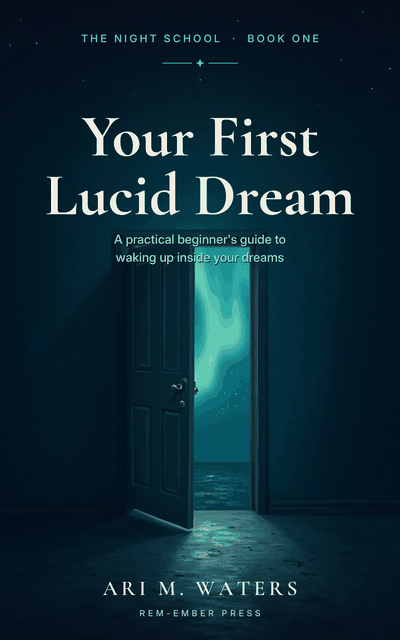
Book One · First to launch
Your First Lucid Dream
A practical beginner's guide to waking up inside your dreams
Half of us have had one by accident. This is how you have one on purpose: the morning habit that stops your brain deleting its dreams, the ten-second reality check that actually holds, the two techniques with real research behind them, and a thirty-night plan that fits inside a normal life. No mysticism, no supplements, no promise you'll be flying by Friday.

Book Two
Remember Your Dreams
You dreamed for hours last night, then deleted the tapes by breakfast. Recall is trainable, and faster than almost any mental skill. Ninety-second mornings, a journal that survives past February, and the patterns hiding in your own archive.
Written · in the queue

Book Three
The Quiet Night
Nobody buys a nightmare book at noon. Bad dreams, night terrors, and sleep paralysis explained honestly, with the evidence-backed tools that quiet them. Even the monster gets a chapter.
Written · in the queue
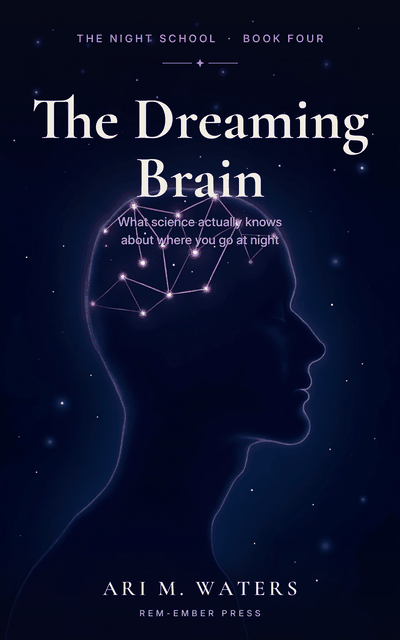
Book Four
The Dreaming Brain
A few times every night, your brain paralyzes your body and builds an entire world. Seventy years of sleep science told as the detective story it is, with the known and the unknown kept honestly apart.
Written · in the queue

Book Five
The Oldest Story
No recorded human culture has ever shrugged at its dreams. We're the outlier. Temple sleep, dream yoga, Gilgamesh, Freud, and the sleep lab: five thousand years of asking what that was, told in order.
Written · in the queue
Be first through the door
Everything in The Night School is built on the habit this site already gives you for free: writing your dreams down. Start a LUCID account, keep your journal, and say yes to email. You'll get one message the night Book One goes live, and nothing else you didn't ask for.
Tell Me When It OpensFree account · free journal · unsubscribe anytime
The Dream Lab
Research &
Writing
Deep reads on the science, history, and experience of dreaming. Updated regularly.
Research
Nightmares May Be Aging You Faster
Presented at the 2025 European Academy of Neurology Congress: weekly nightmares predicted premature death more strongly than smoking, and about 40% of the risk ran through measurably faster biological aging.
Read More →Research
Dreaming About a Problem Helps You Solve It
A 2026 Northwestern study finally cut waking thought out of the dream incubation question. Puzzles that made it into a dream got solved 42% of the time. Ones that didn't: 17%.
Read More →Sleep Science
Dreams Happen Outside REM Sleep
The largest pooled dream dataset ever assembled says REM isn't where dreaming lives. It's just where the odds are best. Deep sleep produces reports about half the time.
Read More →Research
Why You Forget Your Dreams (and Who Doesn't)
A 2025 study followed more than 200 people for two weeks to answer a plain question: why do some of us wake up with our dreams intact while others get nothing? The answer is a mix of who you are and how you sleep.
Read More →Neuroscience
What Your Brain Actually Does During a Lucid Dream
Lucid dreaming is a hybrid brain state, part asleep, part awake. Here is what the fMRI and EEG research actually found happening inside the self-aware dreaming brain.
Read More →History
Dream Yoga: The 2,700-Year Practice That Predates Modern Science
Tibetan monks were systematizing conscious dreaming more than a thousand years before Western labs proved it existed. The tradition behind the technique.
Read More →